
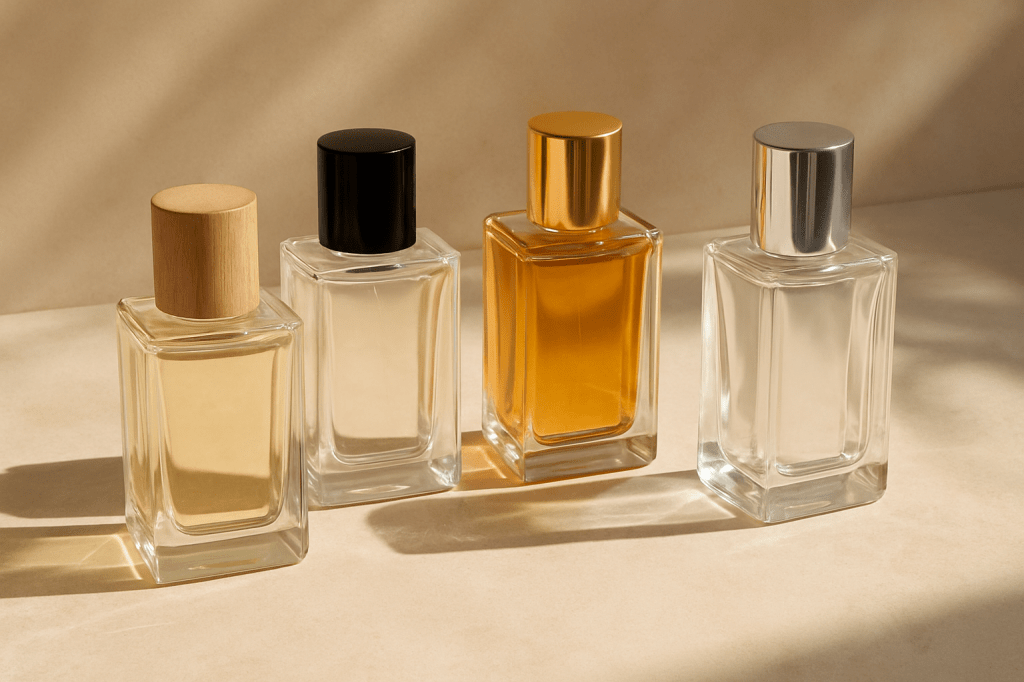
We all love a good scent – something that makes us feel feminine, fresh, and pulled together. From body sprays and lotions to deodorants and shampoos, fragrance is everywhere in personal care. The beauty industry has marketed scent as essential to self-care, confidence, and sensuality. But what if that “clean” or “floral” smell in your lotion or hair serum is quietly messing with your hormones, your mood, and your long-term health?
This post unpacks the hidden truth about fragrance in body care products. While they may smell good and feel luxurious, these products often contain undisclosed chemicals that can disrupt hormones, irritate the skin and lungs, and accumulate in the body over time. Backed by research from the National Institutes of Health (NIH), the Environmental Working Group (EWG), and peer-reviewed studies, we will examine why synthetic fragrance deserves closer scrutiny in your wellness journey.
When you see the word “fragrance” or “parfum” on a product label, that single term can legally represent a mixture of dozens, even hundreds, of different chemicals. Under current U.S. law, companies are not required to disclose the ingredients within their fragrance formulas due to protections for trade secrets. According to a 2015 report by Women’s Voices for the Earth, the average fragrance mixture contains around 14 chemicals, but some products contain far more (1). These undisclosed chemicals are often synthetic and can include phthalates, synthetic musks, and known allergens. Consumers are typically unaware of the potential harm because the packaging gives no clues beyond that one word: fragrance.
Many of these hidden chemicals fall under a category known as endocrine-disrupting chemicals, or EDCs. These are compounds that can mimic, block, or interfere with the body’s natural hormones. Hormones act as messengers that regulate nearly every biological function, from reproduction to metabolism to mood regulation. Disruption to this system can trigger a ripple effect of dysfunction.
Phthalates are among the most widely studied EDCs in personal care products. In a 2009 NIH study “Phthalates and cumulative risk assessment: the tasks ahead,” researchers highlighted how phthalates could interfere with testosterone production and male reproductive development (2). The study indicated that even low-level exposure from everyday products could add up to a significant hormonal burden over time. These disruptions are not limited to men. Women are also impacted, as phthalates and other EDCs can interfere with estrogen pathways, menstrual cycle regulation, and ovarian function.
Hormonal imbalance can present in many ways, and the symptoms often appear subtly at first. Women may notice irregular or painful menstrual cycles, mood swings, weight gain that resists diet and exercise, bloating, low libido, brain fog, and fatigue. As hormone levels continue to fluctuate in an unbalanced state, they may also impact thyroid function, leading to symptoms like cold intolerance, hair thinning, and low energy. Over time, prolonged hormonal disruption may contribute to more serious conditions including polycystic ovary syndrome (PCOS), endometriosis, fibroids, infertility, insulin resistance, and even hormone-sensitive cancers such as breast and ovarian cancer.
Additionally, disruptions in hormones like cortisol and melatonin – key regulators of stress and sleep – can make it difficult to recover from daily demands, further driving fatigue and emotional overwhelm. These symptoms are often dismissed or normalized, especially among women juggling high-stress lifestyles, but they are not inevitable. They are signals from the body that something is off at a foundational level.
A growing body of research links phthalate exposure to early puberty in girls. One such study, published in the journal Environmental Research and supported by NIH, found that higher levels of phthalate metabolites in urine of young girls correlated with earlier onset of breast development and menstruation (3). This is troubling because early puberty has been associated with increased risks for breast cancer, emotional distress, and metabolic syndrome later in life. The study emphasized that personal care products were a major source of these phthalates. The findings also suggest that the hormonal impacts of fragrance chemicals can begin affecting the body long before adulthood, with possible life-long consequences.
Another dimension of concern is the persistence and bioaccumulation of synthetic musks – chemical compounds used in fragrances to create long-lasting scents. A 2005 study published in Environmental Health Perspectives revealed that synthetic musks like galaxolide and tonalide were found in human breast milk, blood, and fat tissues (4). These compounds do not easily break down in the environment or the body. Instead, they accumulate over time, raising questions about their long-term effects on human health. The study emphasized that their presence in breast milk could potentially expose nursing infants to unknown risks. Because these musks are lipophilic, they embed in fatty tissues and may slowly release into the bloodstream, creating a continuous, low-level hormonal disruption.
Fragrance ingredients also have well-documented effects on the skin and respiratory system. A review in the journal Contact Dermatitis found that many common fragrance components, including limonene, linalool, and geraniol, are potent allergens (5). These substances can trigger allergic contact dermatitis, a skin condition characterized by redness, itching, and inflammation. Individuals with sensitive skin or conditions like eczema are particularly vulnerable. Yet these allergens are commonly used in scented body care products marketed as gentle or suitable for sensitive skin. Fragrance-related allergies are often under-diagnosed, and many people suffer with chronic skin irritation without realizing that their body care routine is the culprit.
Inhaling fragrance chemicals can also pose risks. The 2010 report “Not so Sexy: The Health Risks of Secret Chemicals in Fragrance,” co-authored by EWG and the Campaign for Safe Cosmetics, revealed that many fragrance products contain volatile organic compounds (VOCs) like acetaldehyde and styrene (6). These substances are classified as probable human carcinogens and are known to irritate the respiratory system. Consumers may experience headaches, sinus irritation, or asthma exacerbation after using fragranced products, especially in enclosed spaces. Children, pregnant women, and those with compromised immune systems are even more susceptible to these effects, making it essential to avoid unnecessary chemical exposure whenever possible.
The lack of transparency in fragrance labeling means consumers cannot make informed decisions. According to the same report, more than 95 percent of shampoos, conditioners, and body washes on the market contain the term “fragrance” without disclosing the specific ingredients (6). This leaves a wide information gap for anyone trying to reduce their toxic load. It also disproportionately affects women, who on average use 12 personal care products a day, compared to six used by men. Each of these products could contribute a small dose of EDCs, allergens, or respiratory irritants, culminating in a significant cumulative exposure.
Perhaps one of the most hopeful findings comes from a 2016 NIH-funded study published in Environmental Health Perspectives. In this intervention trial, teenage girls were asked to switch their personal care products free of fragrance, phthalates, parabens, and other known toxicants. After just three days, the participants showed a 27 to 45 percent drop in urinary concentrations of these chemicals (7). The results demonstrate that even short-term changes in product choices can lead to measurable reductions in body burden. This is a powerful message for anyone beginning their clean beauty journey: your efforts matter, and your body responds quickly.
The cultural attachment to fragrance is deeply emotional. Scent is connected to memory, mood, and identity. For many women, using a scented body spray or lotion is part of their self-care ritual. But part of reclaiming your health is being willing to question what feels familiar and comforting. What smells like “you” might actually be a chemical formula disrupting your hormones and irritating your skin or lungs. The shift toward fragrance-free living isn’t about giving up joy or pleasure. It’s about redefining what true comfort and beauty mean – though ingredients that nurture rather than harm.
There are safer alternatives. Essential oils can offer a beautiful, complex aroma without the toxic load of synthetic fragrance. Brands that fully disclose ingredients and avoid the use of “fragrance” as a catch-all term are worth supporting. Look for products labeled fragrance-free or those certified by organizations like the EWG. Importantly, fragrance-free does not mean unscented, which may still include masking agents. Transparency in labeling empowers consumers to take control of their health, especially in an industry where marketing often obscures reality.
By choosing products that are transparent, gentle, and grounded in nature, you are not only protecting your endocrine system but also aligning your daily habits with the kind of health and wholeness you truly desire. The body is wise and responsive. When you remove the hidden stressors, it begins to heal. The journey toward cleaner living does not require perfection, but it does benefit from awareness, curiosity, and willingness to evolve.
The next time you pick up a lotion or body wash that smells divine, take a moment to read the label. If it lists “fragrance” without details, consider putting it back. Let your glow come not from a synthetic scent, but from a body in balance – one that reflects the harmony within.
References
- Women’s Voices for the Earth. (2015). Unpacking the Fragrance Industry. https://www.womensvoices.org/wp-content/uploads/2015/03/Unpacking-the-Fragrance-Industry.pdf
- Swan, S. et al. (2008). Phthalates and cumulative risk assessment: the tasks ahead. NIH. https://www.ncbi.nlm.nih.gov/pmc/articles/PMC2726844/
- Wolff MS, et al. (2014). Exposure to phthalates and puberty in girls. Environmental Research. https://pubmed.ncbi.nlm.nih.gov/26851617/
- Luckenbach T, et al. (2005). Synthetic musks in human tissue. Environmental Health Perspectives. https://www.ncbi.nlm.nih.gov/pmc/articles/PMC1242074/
- Hostynek JJ & Maibach HI. (2015). Contact allergy to fragrance ingredients. Contact Dermatitis Journal. https://pubmed.ncbi.nlm.nih.gov/25676006/
- EWG & Campaign for Safe Cosmetics. (2010). Not So Sexy: The Health Risks of Secret Chemicals in Fragrance. https://www.ewg.org/sites/default/files/report/NotSoSexy.pdf
- Harley KG, et al. (2016). Reducing phthalate and paraben exposure in adolescent girls. Environmental Health Perspectives. https://www.ncbi.nlm.nih.gov/pmc/articles/PMC4892920/
 Awaken Her
Leave a comment